Windows 10 / 11 · 64-bit
Blocks porn. Won’t come off.
Removing it takes a waiting period you set yourself. You can make it longer at any time. You can never make it shorter.
The rule
You set the waiting period.
Five settings. Pick one when you install it. Taking Basalt off takes that long, every time — and there is no path that shortens it. Not for you, not for us.
What you see
This is what a blocked site looks like.
Nothing dramatic happens. The page does not load, and the browser says who stopped it.
This page is blocked
Your organization doesn’t allow you to view this site
Three real captures, from a machine running it — Chrome, Firefox and Edge. Chrome’s is in Romanian because that machine is; Edge draws the same Chromium screen in English, and that is the wording above. None of the three shows an address bar, because we do not render an adult site, ever — not even one that refused to load.
Every way out
Every way out, and what happens when you try it.
These are the eight things people actually try at one in the morning. Each is named with the mechanism rather than with an adjective.
05–08 Four more ways out The system clock, a second Windows account, a portable browser, and the VPN — the one that only partly holds.
Nothing on this page is a measurement yet. The engine is still being built, and every row above is what it is built to do. Each one becomes a test with a number against it before it becomes a claim here.
The one thing it does not do.
A VPN that was already installed and running before Basalt can carry a request past it. Basalt refuses the VPN clients it knows and blocks new ones from installing, but it cannot claim a network tunnel it never saw being opened.
This section sits before the price on purpose, and it is deliberately short. An honest limit padded out to look thorough reads as an apology.
Privacy
Nothing you browse leaves this PC.
- StaysThe list of sites you tried to reach
- StaysWhich browser you used
- StaysWhen, and how often
- StaysAnything at all about your screen
- LeavesYour sign-in and a licence check — nothing about browsing
The fifth row is why the first four are worth believing. Open the network tab and count.
 Why quit
Six findings worth quitting over.
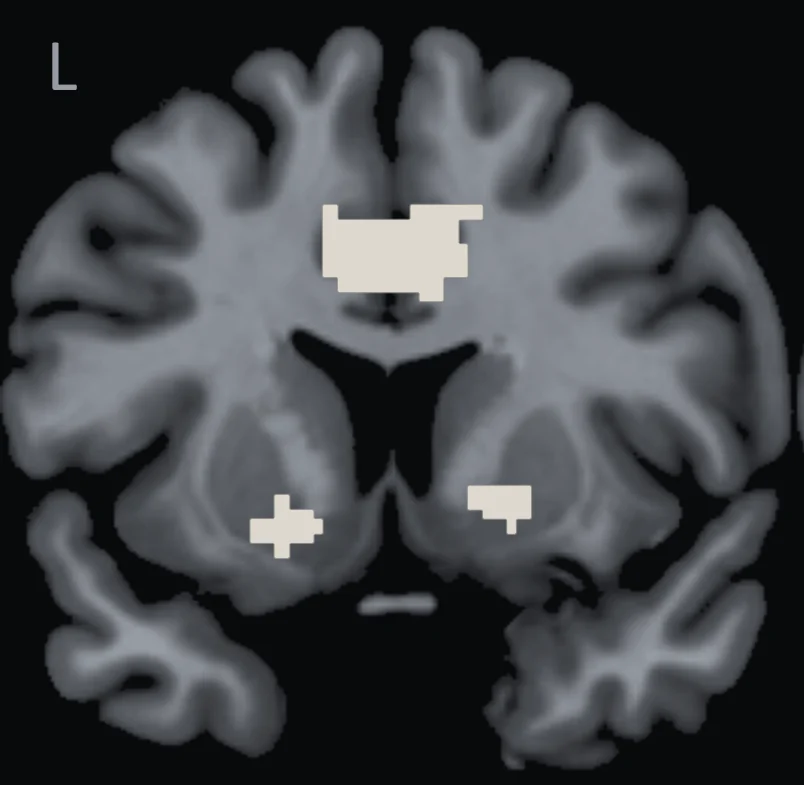
Brain scans, erection problems and what helps, each linked to the study it came from. Read them →Scan: Figure 2 from Voon V, et al. (2014), PLoS ONE 9(7): e102419, CC BY 4.0, cropped and recoloured.
What it costs
$129 once. Or $19 a month.
Windows 10 / 11, 64-bit, and your iPhone too. No Mac, no router. Family covers three PCs and three iPhones for $249 once or $39.99 a month. iPhone only: $50 once or $9 a month. The one-time prices are for the first 200 buyers, then they retire.
Or nothing at all, if you beat it.
Get past Basalt on a machine it is running on, write up exactly how, and send it to support. You get a lifetime licence. Then we fix the hole and publish what it was.
- It has to work on a normal running Windows install. Reinstalling Windows or wiping the disk is not a bypass — that is a new computer.
- It has to be reproducible from your write-up. “It just stopped working” is not a report.
- First report of a given hole takes it. If two people send the same one, the earlier timestamp wins.
- One licence per distinct bypass, and no cap on how many you find.
The bounty costs us a licence, which costs us nothing to make. It buys the one thing a product with no customers cannot buy: somebody else genuinely trying to break it.